

How to Lower Credit Utilization Quickly starts with one simple idea: reduce the amount of your available credit that appears to be in use when your card issuer reports your balance.
Credit utilization can affect your credit score because scoring models look at how much revolving credit you use compared with your available limits. In a typical FICO® Score, the broader “amounts owed” category accounts for 30% of the score.
However, you do not need to panic if your utilization is temporarily high. In many cases, a lower reported balance can help your score after the lower balance reaches your credit reports.
This guide explains How to Lower Credit Utilization Quickly using practical steps, real-number examples, a case study, expert guidance, advantages, disadvantages, and a simple action plan.
Important: Credit scoring varies by person and scoring model. No method guarantees a specific score increase.
Why How to Lower Credit Utilization Quickly Matters
Understanding How to Lower Credit Utilization Quickly can help when you plan to apply for a credit card, auto loan, mortgage, rental, or another type of financing.
Your utilization ratio compares your credit card balance with your credit limit.
For example:
- Credit limit: $5,000
- Reported balance: $2,000
- Utilization: 40%
The math is:
$2,000 ÷ $5,000 × 100 = 40%
Generally, lower utilization is better. The Consumer Financial Protection Bureau says experts often recommend staying at or below 30%, while some experts recommend going below 10%.
How to Lower Credit Utilization Quickly Starts With Math
Before making payments, calculate your current ratio.
Use this formula:
Total credit card balances ÷ total credit limits × 100 = overall utilization
Suppose you have three cards:
| Card | Credit Limit | Balance | Utilization |
| Card A | $4,000 | $1,600 | 40% |
| Card B | $3,000 | $600 | 20% |
| Card C | $8,000 | $800 | 10% |
| Total | $15,000 | $3,000 | 20% |
Your overall utilization is 20%.
That looks better than 40% because your total available credit is higher.
Still, do not look only at the overall number. FICO also considers utilization on individual revolving accounts.
How to Lower Credit Utilization Quickly With One Payment
The fastest practical move is often to make an extra payment before the balance gets reported.
For example, imagine your card has:
- $6,000 limit
- $3,000 balance
- 50% utilization
If you pay $1,800, your balance becomes $1,200.
Now:
$1,200 ÷ $6,000 × 100 = 20%
That is a large change from 50% to 20%.
However, timing matters because the balance shown on your credit report may not equal the balance you see in your banking app. Card issuers often report around the end of a statement period.
How to Lower Credit Utilization Quickly Before a Loan
If you plan to apply for a major loan, start early.
First, check your card balances.
Next, find each statement closing date.
Then, pay down balances before the issuer reports them.
Finally, check your credit reports afterward.
This approach may work better than waiting until the payment due date because the statement balance and reported balance can differ.
How to Lower Credit Utilization Quickly Before the Statement Closes
Your payment due date and statement closing date are not always the same.
The due date tells you when your payment must arrive to avoid being late.
The statement closing date marks the end of a billing period.
Therefore, someone can pay the minimum by the due date and still have a high balance reported.
For a quick utilization reduction, ask your card issuer:
“What date do you normally report my balance to the credit bureaus?”
That simple question can help you plan payments more effectively.
How to Lower Credit Utilization Quickly With Multiple Payments
You do not have to make only one payment each month.
For example, instead of spending $1,000 and waiting until the end of the month, you could make smaller payments during the month.
You might pay:
- $250 after the first week
- $250 after the second week
- $250 after the third week
- $250 near the end of the billing cycle
This strategy can keep the balance from becoming too large.
Experian also notes that paying periodically throughout the month can help keep utilization from becoming too high.
How to Lower Credit Utilization Quickly by Paying One Card
If you have several cards, focus on the card with the highest utilization when your goal is a fast reduction.
For example:
| Card | Limit | Balance | Ratio |
| A | $10,000 | $2,000 | 20% |
| B | $2,000 | $1,500 | 75% |
| C | $5,000 | $500 | 10% |
Your overall ratio may not look terrible.
However, Card B has a 75% utilization rate.
Paying down Card B can remove that high individual ratio.
FICO considers both overall utilization and utilization on individual revolving accounts.
How to Lower Credit Utilization Quickly Without Opening Cards
You do not need another credit card to reduce utilization.
In fact, opening new accounts simply to create more available credit can create other issues.
New credit is one of the factors considered in FICO scoring, and opening several accounts in a short period can increase risk signals.
Therefore, start with the credit you already have.
How to Lower Credit Utilization Quickly Through a Credit Limit Increase
Another possible method is asking your card issuer for a higher limit.
For example:
- Current limit: $5,000
- Balance: $2,000
- Current utilization: 40%
If your limit rises to $10,000 while your balance remains $2,000:
$2,000 ÷ $10,000 = 20%
Your utilization falls without paying $1,000 of debt.
However, there is no guarantee the issuer will approve the request.
Also, the issuer may perform a credit check depending on its policies.
So, ask about the process before requesting an increase.
How to Lower Credit Utilization Quickly Without More Debt
A higher credit limit should never become an excuse to spend more.
That creates a common trap.
For example, if your limit increases from $5,000 to $10,000 but your spending also rises from $2,000 to $6,000, your utilization becomes 60%.
Therefore, treat additional available credit as a safety cushion, not extra income.
How to Lower Credit Utilization Quickly by Stopping New Charges
Sometimes the simplest move is to stop adding new debt.
If your card balance is $4,000, paying $500 while adding $700 does not solve the problem.
Instead, pause unnecessary card spending.
Then direct extra money toward the balance.
This creates a clear downward trend.
How to Lower Credit Utilization Quickly With a Spending Freeze
Try a short spending freeze on revolving credit.
For seven to 30 days, use cash or a debit account for normal purchases if you can afford them.
Meanwhile, keep paying your credit card balance.
This can help you see whether your balance is falling or simply moving around.
How to Lower Credit Utilization Quickly Using Your Budget
A budget gives your payment plan a job.
Start with your monthly income.
Then subtract:
- Housing
- Food
- Utilities
- Transportation
- Insurance
- Minimum debt payments
- Other required bills
After that, find money you can safely send toward credit card debt.
Do not sacrifice essential bills just to chase a faster score improvement.
How to Lower Credit Utilization Quickly With Extra Income
Extra income can speed up debt payments.
Possible sources include:
- Overtime
- Freelance work
- Selling unused items
- Temporary weekend work
- A tax refund
- A work bonus
Use extra money carefully.
If you have high-interest credit card debt, paying that debt can also reduce future interest costs.
How to Lower Credit Utilization Quickly After a Large Purchase
A large purchase can temporarily raise utilization.
For example, you might use a card to pay a $2,000 emergency bill.
Instead of waiting for several months, create a payment plan immediately.
Pay what you can before the next reporting period.
Then continue paying until the balance reaches a comfortable level.
How to Lower Credit Utilization Quickly With a Balance Transfer
A balance transfer can sometimes reduce interest costs.
However, it does not automatically solve utilization.
Suppose you move $4,000 from a card with a $5,000 limit to a new card with a $10,000 limit.
The new card starts at 40% utilization.
Your old card may show $0, but your overall utilization depends on all your limits and balances.
Also, balance transfers can involve fees and new-credit considerations.
Therefore, calculate the complete cost before moving debt.
How to Lower Credit Utilization Quickly Without Closing Old Cards
Think carefully before closing an unused card.
Closing a card can remove available credit and raise your overall utilization.
The CFPB specifically warns that closing a card can increase utilization and potentially lower a credit score.
For example:
- Total limits before closing: $20,000
- Total balances: $4,000
- Utilization: 20%
If you close a card with a $10,000 limit:
- Remaining limits: $10,000
- Balances: $4,000
- Utilization: 40%
Nothing about the debt changed.
Yet the ratio doubled.
How to Lower Credit Utilization Quickly by Checking Reports
Your credit report can reveal information that your credit card app does not show.
Check for:
- Incorrect balances
- Wrong limits
- Accounts you do not recognize
- Duplicate accounts
- Outdated information
- Reporting errors
The CFPB recommends checking credit reports because mistakes can hurt your credit history and score.
For U.S. consumers, use the official government-authorized site AnnualCreditReport.com to access credit reports.
How to Lower Credit Utilization Quickly by Fixing Errors
Imagine your real credit limit is $10,000.
However, your report incorrectly shows $5,000.
If your balance is $2,000, the report would make your utilization look like 40% instead of 20%.
That difference matters.
If you find an error, contact the company that supplied the information and the appropriate credit reporting company.
Keep copies of your documents.
How to Lower Credit Utilization Quickly With the Right Target
Many people hear “30%” and treat it like a goal.
That is not the best way to think about it.
Thirty percent is better viewed as a ceiling or general benchmark, not a magic number.
Experian reports that people with very strong scores often have utilization below 10%.
So, if you can safely keep utilization below 10%, that can be a useful target.
Still, do not borrow money or pay essential bills simply to reach a certain percentage.
How to Lower Credit Utilization Quickly With a 30% Target
Here is a simple example.
If your total limits equal $12,000:
30% = $3,600
So, keeping reported balances below $3,600 puts you below the common 30% benchmark.
A lower target could be:
10% = $1,200
The lower number can provide more breathing room.
How to Lower Credit Utilization Quickly With a 10% Target
A 10% target can be useful if your budget allows it.
For a $10,000 total credit limit:
- 10% = $1,000
- 20% = $2,000
- 30% = $3,000
- 50% = $5,000
- 80% = $8,000
These numbers make the idea easier to understand.
However, credit scores use more than one factor.
How to Lower Credit Utilization Quickly When Cash Is Tight
If money is tight, do not empty your emergency fund just to lower utilization.
Instead, make a realistic plan.
First, keep required bills current.
Next, avoid new card spending.
Then, pay extra toward the highest-cost debt when possible.
Finally, look for ways to increase income or lower expenses.
Your financial safety matters more than chasing a quick score change.
How to Lower Credit Utilization Quickly Without Carrying Interest
You do not need to carry a credit card balance to build credit.
The CFPB says you do not need to carry a balance to get a good credit score.
Likewise, Experian says carrying a revolving balance from month to month does not benefit your score and can create interest charges.
Therefore, pay your statement balance in full when you can.
How to Lower Credit Utilization Quickly Before Applying for Credit
If you expect a lender to review your credit soon, start reducing balances before the application.
For example, give yourself several weeks if possible.
Check reporting dates.
Pay balances down.
Then monitor your credit reports and scores.
Remember that lenders may use different scoring models, so the score you see may not be the score the lender uses.
How to Lower Credit Utilization Quickly With Automatic Payments
Automatic payments can protect your payment history.
Set at least the minimum payment on autopay if your bank balance supports it.
Then make additional payments manually when you have extra money.
This gives you two layers of protection:
Autopay = protects against forgetting.
Extra payment = reduces debt faster.
The CFPB recommends automatic payments or electronic reminders as ways to help keep payments on time.
How to Lower Credit Utilization Quickly Without Missing Bills
Never send every available dollar to a credit card if doing so causes another bill to become late.
Payment history is extremely important.
FICO lists payment history as its largest scoring category at 35%.
Therefore, lowering utilization should work alongside on-time payments.
How to Lower Credit Utilization Quickly With a Debt Plan
Try this simple three-step plan:
Step 1: List every card balance and limit.
Step 2: Calculate each utilization percentage.
Step 3: Choose a payment target and deadline.
For example:
“I have $4,000 in card balances. I want to reduce them to $2,000 within four months.”
That means an average reduction of $500 per month, before considering interest and new charges.
How to Lower Credit Utilization Quickly: Real-Life Example
Consider Maya, a fictional example based on a common credit situation.
Maya has:
- $8,000 total credit limits
- $4,000 total card balances
- 50% overall utilization
She wants to improve her credit profile before applying for an apartment.
Instead of opening another card, she creates a four-week payment plan.
She pays $1,500 toward her balances.
Her debt falls to $2,500.
Now:
$2,500 ÷ $8,000 × 100 = 31.25%
She is much closer to the commonly recommended 30% range.
If she later pays another $1,000:
$1,500 ÷ $8,000 × 100 = 18.75%
The important lesson is not that Maya receives a guaranteed score increase.
The lesson is that reducing reported balances can quickly change utilization.
How to Lower Credit Utilization Quickly: Mini Case Study
Consider another fictional example.
Daniel has three cards:
| Card | Limit | Balance Before | Balance After |
| Card A | $2,000 | $1,600 | $800 |
| Card B | $5,000 | $1,000 | $1,000 |
| Card C | $8,000 | $1,400 | $1,000 |
| Total | $15,000 | $4,000 | $2,800 |
Before payment:
$4,000 ÷ $15,000 = 26.7%
After payment:
$2,800 ÷ $15,000 = 18.7%
Daniel reduced his overall utilization by about eight percentage points.
However, Card A still has 40% utilization.
So, he may continue paying that card down.
How to Lower Credit Utilization Quickly: Expert Advice
The strongest general advice from major credit sources is simple:
- Keep card balances low.
- Pay bills on time.
- Avoid maxing out cards.
- Avoid unnecessary new accounts.
- Check your credit reports for errors.
- Be careful about closing cards.
- Do not carry interest-bearing balances just to “build credit.”
FICO says amounts owed represent about 30% of a typical FICO Score, while the CFPB stresses low balances and on-time payments.
How to Lower Credit Utilization Quickly: Advantages
Reducing utilization can offer several benefits.
Possible advantages
- Lower reported card balances
- Less risk of appearing maxed out
- Potential improvement in some credit scores
- Lower interest costs when balances fall
- More available credit
- Better preparation for a future loan application
- Greater control over monthly spending
Still, the actual score effect varies by credit profile.
How to Lower Credit Utilization Quickly: Disadvantages
There can also be downsides to rushing.
Possible disadvantages
- You could drain your emergency savings.
- You could miss another important bill.
- You might transfer debt without reducing it.
- A credit-limit request may not be approved.
- Opening new cards can add new-credit activity.
- Closing cards can reduce available credit.
- Balance transfers may charge fees.
Therefore, choose the method that improves your overall finances, not just one number.
How to Lower Credit Utilization Quickly With a Simple Chart
| Action | Speed | Cost | Main Benefit | Main Risk |
| Pay card balance | Fast | Usually no fee | Lowers debt | Uses cash |
| Multiple monthly payments | Fast | Usually no fee | Keeps balances lower | Requires planning |
| Credit-limit increase | Potentially fast | Varies | Adds available credit | Approval not guaranteed |
| Stop new charges | Immediate | None | Prevents balance growth | Requires discipline |
| Balance transfer | Varies | Possible fee | May lower interest | New account/fees |
| Close card | Immediate | None | Can simplify finances | May increase utilization |
| Budget cuts | Medium | Lifestyle change | Creates payment money | Can feel restrictive |
How to Lower Credit Utilization Quickly: The 48-Hour Plan
If you need to act quickly, start today.
Day 1
Check every card balance.
Write down every credit limit.
Calculate your utilization.
Identify your statement closing dates.
Day 2
Make a payment you can safely afford.
Stop unnecessary card spending.
Set an automatic minimum payment.
Then monitor your accounts.
Remember that credit reporting does not always happen immediately.
How to Lower Credit Utilization Quickly: The Seven-Day Plan
During the next week:
Day 1: Calculate your ratios.
Day 2: Review your budget.
Day 3: Cancel or pause unnecessary spending.
Day 4: Send an extra payment.
Day 5: Contact your card issuer about reporting dates.
Day 6: Review your credit reports.
Day 7: Create your next payment target.
This simple routine can turn a stressful credit problem into a clear task list.
How to Lower Credit Utilization Quickly: The 30-Day Plan
For the next month, focus on three things:
Lower balances.
Avoid new debt.
Never miss required payments.
At the end of the month, calculate your ratios again.
Compare your new numbers with your starting point.
Even if your score does not change immediately, the lower debt can still improve your financial position.
How to Lower Credit Utilization Quickly When One Card Is Maxed Out
A maxed-out card can create a very high individual utilization ratio.
If you have several cards, avoid assuming your overall ratio tells the whole story.
For example:
- Card A: $1,000 limit, $1,000 balance
- Card B: $9,000 limit, $500 balance
Overall utilization is 15%.
Yet Card A is at 100%.
Paying down the maxed-out card may be a smart priority.
How to Lower Credit Utilization Quickly and Protect Your Score
Do not focus so heavily on utilization that you forget the rest of your credit profile.
FICO considers five broad categories:
| FICO Category | Typical Weight |
| Payment history | 35% |
| Amounts owed | 30% |
| Length of credit history | 15% |
| New credit | 10% |
| Credit mix | 10% |
These percentages describe a typical FICO model, and the importance can vary by person.
So, utilization matters, but it is not your entire score.
How to Lower Credit Utilization Quickly: Address and Help
If you find a credit-report problem that you cannot resolve directly, the Consumer Financial Protection Bureau provides consumer information and complaint assistance.
Consumer Financial Protection Bureau
Mailing address:
445 12th Street, SW
Washington, DC 20024
Phone: 855-411-2372
The CFPB says consumers can contact it about problems involving consumer financial products and services.
For credit reports, use the official AnnualCreditReport.com website rather than an unfamiliar site that asks for unnecessary personal information.
How to Lower Credit Utilization Quickly: What Not to Do
Avoid these common mistakes:
- Do not max out another card.
- Do not take expensive loans just to lower utilization.
- Do not close cards without considering the effect.
- Do not miss rent or utility payments to pay a card.
- Do not assume 30% is a magic score line.
- Do not carry interest simply because you think it helps your score.
- Do not open many new accounts without a good reason.
A lower credit card balance is helpful, but your entire financial picture matters more.
How to Lower Credit Utilization Quickly: Common Myths
Myth 1: You must carry a balance.
False. Carrying a balance does not help your credit score and can lead to interest charges.
Myth 2: 30% is the perfect utilization rate.
Not exactly. It is a common benchmark, not a magic number.
Myth 3: Paying the bill by the due date always creates a low reported balance.
Not necessarily. The issuer may report a balance from another point in the billing cycle.
Myth 4: Closing unused cards always improves credit.
No. Closing a card can reduce available credit and raise utilization.
How to Lower Credit Utilization Quickly: Your Best Checklist
Before you finish, use this checklist:
- List all credit cards.
- Record every credit limit.
- Record every current balance.
- Calculate each utilization ratio.
- Calculate overall utilization.
- Find statement closing dates.
- Make an affordable extra payment.
- Stop unnecessary new charges.
- Keep minimum payments on autopay.
- Check your credit reports.
- Look for incorrect balances or limits.
- Avoid unnecessary new accounts.
- Think carefully before closing cards.
- Review your progress after reporting updates.
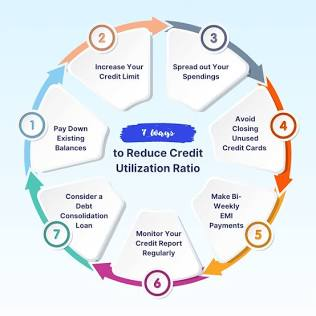
How to Lower Credit Utilization Quickly: FAQs
- What is credit utilization?
Credit utilization is the percentage of your available revolving credit that you are using.
- What is a good utilization ratio?
Below 30% is a common guideline, while people with very strong scores often have utilization below 10%.
- Can paying my card lower utilization quickly?
Yes. Paying down a reported card balance can reduce the utilization ratio once the lower balance appears on your credit report.
- Should I pay my card before the due date?
Yes, you should always pay at least the required amount by the due date. Paying earlier can also help keep balances lower.
- Is the statement date important?
Yes. The balance around the statement period may be the balance your issuer reports.
- Does carrying a balance help my credit?
No. You do not need to carry interest-bearing debt to build a good credit score.
- Is 30% utilization bad?
Thirty percent is not a universal “bad” line. However, lower utilization is generally better.
- Is 10% utilization better?
A low single-digit or below-10% utilization rate is often associated with strong credit profiles, but there is no guaranteed score outcome.
- Can I reduce utilization without paying debt?
Sometimes. A credit-limit increase can lower your ratio if your balance stays the same.
- Does closing a card lower utilization?
Usually, closing a card reduces your available credit. Therefore, it can increase utilization.
- Should I request a credit-limit increase?
It may help, but ask about the issuer’s approval process and whether a credit check could occur.
- Does a balance transfer lower utilization?
It can change where your debt appears and may change overall utilization, but fees and new-credit effects must be considered.
- How quickly can utilization affect my score?
It can change after updated balances reach the credit bureaus, but timing and score effects vary.
- Do all credit cards report at the same time?
No. Issuers can have different reporting schedules.
- Should I pay all cards to zero?
Paying balances in full can avoid interest, but you should still keep enough cash for essential expenses and emergencies.
- Can one maxed-out card hurt my score?
Yes. Individual-card utilization can matter even when your overall utilization looks reasonable.
- Does checking my own credit report hurt my score?
Checking your own credit report does not create the same type of inquiry as applying for new credit.
- Can a higher credit limit hurt me?
A higher limit itself is not necessarily harmful. The danger comes when higher available credit encourages more spending.
- What matters more, utilization or payment history?
Both matter, but FICO identifies payment history as its largest category at 35%, while amounts owed represents 30% in a typical model.
- What is the fastest safe strategy?
Usually, the safest approach is to stop unnecessary card spending, make an affordable extra payment, keep every required payment on time, and understand when your issuer reports balances.
How to Lower Credit Utilization Quickly: Final Takeaway
The best approach to How to Lower Credit Utilization Quickly is not a secret trick.
It is a simple combination of smart timing, lower balances, controlled spending, and on-time payments.
Start by calculating your current utilization.
Then identify the cards with the highest balances compared with their limits.
Next, make an extra payment that your budget can handle.
After that, avoid adding new charges while you work down the balance.
Also, learn your statement closing dates because the balance reported to the credit bureaus may differ from the balance you see when you check your account.
Most importantly, do not sacrifice rent, food, emergency savings, or other essential bills simply to chase a lower credit utilization percentage.
A strong credit profile comes from several good habits working together. Pay on time, keep balances manageable, avoid unnecessary new debt, check your reports, and give your progress time to show.
Sources and helpful resources
- Consumer Financial Protection Bureau — Credit Scores and Reports
- myFICO — Amounts Owed and Credit Utilization
- Experian — Credit Utilization Explained
- AnnualCreditReport.com — Official Credit Report Access