

Statement Balance vs Current Balance: What’s the Difference? is one of the most common questions people ask after opening a credit card account. At first, the two numbers can look almost the same. However, they do different jobs.
In simple terms, your statement balance is the amount you owed when your last billing cycle ended. Your current balance is the amount you owe based on the latest posted activity on your account.
Therefore, you may see a statement balance of $500 while your current balance shows $650. That does not automatically mean something went wrong. Instead, you may have made another $150 in purchases after your statement closed.
This guide explains the difference in very simple language. It also covers payment dates, interest, credit scores, credit utilization, minimum payments, pending purchases, refunds, real-life examples, advantages, disadvantages, and common mistakes.
The Consumer Financial Protection Bureau (CFPB) explains that a grace period can allow you to avoid interest on purchases when you pay the required balance in full by the due date, depending on your card terms.
So, if you have ever wondered which number you should pay, keep reading.
Statement Balance vs Current Balance: The Simple Answer
Statement Balance vs Current Balance: What’s the Difference? becomes easy once you think about two different dates.
Your statement balance is a snapshot.
Your current balance is a running number.
For example, imagine your credit card billing cycle ends on June 30.
At that time, you owe $800.
Your card company creates your statement and records $800 as your statement balance.
Then, on July 5, you buy something for $100.
Now your current balance may become $900.
However, your statement balance remains $800 until the next billing cycle closes.
Experian describes the statement balance as the amount owed at the end of a billing cycle, while the current balance reflects the account’s latest posted activity.
Therefore, the two numbers can be different without any problem.
What Is a Statement Balance?
A statement balance is the amount shown on your credit card statement when the billing cycle ends.
Think of it as a monthly snapshot.
During the billing cycle, you may buy groceries, pay for fuel, order clothes, receive refunds, or make payments.
At the end of the cycle, your card issuer adds up the activity that posted during that period.
The result becomes your statement balance.
For example:
- Starting balance: $200
- New purchases: $600
- Payment: $300
- Refund: $50
- Statement balance: $450
Your statement then shows the $450 balance.
That number usually stays fixed after the statement closes, although later payments or adjustments can change what you currently owe.
What Is a Current Balance?
Your current balance tells you how much you owe based on your account activity at the time you check it.
Therefore, it can change many times during a month.
Suppose your statement balance is $450.
Then you make these purchases:
- $50 for groceries
- $30 for gas
- $70 for a restaurant meal
Your current balance could rise to $600.
However, your statement balance remains $450 until your next statement closes.
Your current balance can also fall when you make a payment or receive a refund.
Experian notes that the current balance can include posted purchases, payments, fees, and other account activity.
Statement Balance vs Current Balance: A Quick Comparison
| Feature | Statement Balance | Current Balance |
| Meaning | Amount owed when the billing cycle ended | Amount owed based on current posted activity |
| Update | Usually once per billing cycle | Changes as account activity posts |
| Found on statement | Yes | Usually not as a fixed statement figure |
| Includes new purchases after closing | No | Yes, when posted |
| Used for monthly bill | Yes | Not usually the amount listed as the monthly statement bill |
| Can change during the cycle | Normally no | Yes |
| Useful for paying the monthly bill | Very useful | Useful for knowing your total current debt |
| Can be higher than statement balance | No, unless later adjustments affect the account | Yes |
| Can be lower than statement balance | It can happen after payments or credits | Yes |
| Important for credit management | Yes | Yes |
So, Statement Balance vs Current Balance: What’s the Difference? can be summed up in one sentence: statement balance looks backward to the last billing-cycle ending date, while current balance looks at your account now.
Statement Balance vs Current Balance: Why Two Numbers Exist
You may wonder why credit card companies do not simply show one balance.
The reason is that credit cards work through billing cycles.
Your card issuer needs a specific date to close your monthly account activity. That creates a statement.
At the same time, you need to know what you owe today.
Therefore, your account needs both ideas.
The statement balance answers:
“How much did I owe when this bill was created?”
The current balance answers:
“How much do I owe based on my account activity now?”
That distinction makes credit card payments easier to understand.
How a Credit Card Billing Cycle Works
A billing cycle is the period during which your card company records transactions for a particular statement.
For example, your cycle might run from June 1 through June 30.
During those 30 days, you could make several purchases.
On June 30, the cycle closes.
Your card company then creates your statement.
Your statement may show:
- Statement balance
- Minimum payment
- Payment due date
- Transactions
- Fees
- Interest, if applicable
- Credits and refunds
After June 30, new purchases usually belong to the next billing cycle.
The CFPB explains that credit card statements provide the minimum payment and due date, while paying more than the minimum can reduce interest costs and help you pay off the balance faster.
Statement Balance vs Current Balance: A Timeline Example
Let’s make the idea even easier.
Imagine this timeline:
July 1: Billing cycle begins.
July 10: You spend $200.
July 15: You spend $100.
July 25: You spend $150.
July 31: Billing cycle ends.
Your statement balance is now:
$450
Then:
August 3: You spend $75.
Your current balance becomes:
$525
The statement balance is still:
$450
Why?
Because the $75 purchase happened after the July statement closed.
Therefore, Statement Balance vs Current Balance: What’s the Difference? is mainly about timing.
Statement Balance vs Current Balance: Real-Life Example
Meet Daniel.
Daniel has a credit card with a $3,000 limit.
His statement closes on August 1.
Before the statement closes, Daniel spends:
- $200 on groceries
- $100 on fuel
- $300 on a laptop
- $100 on household items
His total is $700.
Therefore, his statement balance becomes $700.
Daniel then buys shoes for $150 on August 5.
Now his current balance becomes $850.
Daniel checks his app and feels confused.
He thinks, “Why does my app say $850 when my bill says $700?”
Nothing is wrong.
The extra $150 comes from his new purchase.
If Daniel pays the $700 statement balance by the due date, he may avoid interest on eligible purchases if his card provides a grace period and he meets its terms.
The $150 purchase belongs to the newer billing period.
Why Your Current Balance Can Be Higher
Your current balance can be higher because you used your card after the statement closing date.
For example:
- Statement balance: $900
- New purchase: $250
- Current balance: $1,150
This is normal.
Also, your current balance may include new fees or interest that posted after the statement.
However, every card works according to its own agreement.
Therefore, always check the transaction list if the difference seems unusual.
Why Your Current Balance Can Be Lower
Your current balance can also be lower than your statement balance.
Suppose your statement balance is $1,000.
Then you make a $400 payment.
Your current balance may drop to $600.
In this case, you have already paid part of your previous statement balance.
You may also receive a refund.
For example:
- Statement balance: $1,000
- Refund: $200
- Current balance: $800
The CFPB says a credit balance can occur when payments, refunds, rewards, or other credits exceed what you owe.
Statement Balance vs Current Balance: Which Should You Pay?
For many people, the best routine is to pay the full statement balance by the due date.
Why?
Because a card with a grace period may allow you to avoid interest on eligible purchases when you pay the balance in full by the due date.
However, your card’s exact rules matter.
You do not normally need to pay every new purchase immediately just because it appears in your current balance.
For example:
- Statement balance: $700
- Current balance: $900
- Due date: August 25
If you pay $700 by August 25, the newer $200 may remain for the next billing period.
That does not mean you should spend more than you can afford.
Instead, use your current balance to track your overall spending.
Statement Balance vs Current Balance: What If You Pay Both?
You can pay the current balance instead.
Suppose:
- Statement balance = $700
- Current balance = $900
If you pay $900, you have paid the entire amount currently posted to your account.
That can make budgeting simple.
However, paying the current balance is not always necessary to avoid interest.
If your card offers a grace period and you qualify for it, paying the statement balance in full by the due date may be enough for eligible purchases.
So, paying the current balance can be helpful, but it is not automatically better for everyone.
Statement Balance vs Current Balance: What About Minimum Payments?
Your minimum payment is different from both balances.
For example:
- Statement balance: $1,000
- Current balance: $1,200
- Minimum payment: $40
The $40 may keep the account current if you pay it by the due date.
However, paying only $40 can leave a large balance.
That can lead to interest charges when your account does not qualify for a grace period.
The CFPB recommends paying more than the minimum when possible because doing so can reduce interest costs and shorten the time needed to pay off debt.
Therefore, think of the three numbers like this:
Statement balance: your last monthly bill.
Current balance: what your account shows now.
Minimum payment: the smallest required payment for that billing period.
Why Paying Only the Minimum Can Cost More
Minimum payments can look easy.
However, they can keep debt around for a long time.
Imagine you owe $2,000 and your minimum payment is relatively small.
If you keep adding new purchases, the balance may not fall quickly.
Interest can also add to your cost.
The CFPB says paying only the minimum can take years in some cases, while paying more can reduce interest and speed up repayment.
Therefore, if you can afford it, aim to pay the full statement balance.
If you cannot, pay at least the required minimum on time and then put extra money toward the debt when possible.
Statement Balance vs Current Balance: How Interest Works
Interest is one of the biggest reasons this topic matters.
If your card offers a grace period, paying the applicable balance in full by the due date can help you avoid interest on eligible purchases.
However, if you carry a balance, interest can apply.
The CFPB explains that many card companies calculate interest daily using an average daily balance or another method described in the card agreement.
For that reason, carrying debt can become expensive.
Also, cash advances may have different rules.
Therefore, never assume that every type of transaction gets the same grace period.
What Is a Credit Card Grace Period?
A grace period is the time between the end of a billing cycle and the payment due date.
During this time, you may avoid interest on eligible purchases if you meet your card’s requirements.
The CFPB says card companies do not have to offer a grace period, although most credit cards provide one for purchases.
Therefore, check your card agreement.
For many people, the basic strategy is simple:
- Use the card for planned purchases.
- Wait for the statement.
- Check the statement balance.
- Pay the full statement balance by the due date.
- Continue spending within your budget.
Statement Balance vs Current Balance: Credit Score Impact
Your credit card balance can affect your credit score through credit utilization.
Credit utilization compares the balance reported on your revolving accounts with their credit limits.
For example:
- Credit limit: $5,000
- Reported balance: $1,000
- Utilization: 20%
A lower utilization rate is generally viewed more favorably by many scoring systems.
However, there is no single magic number that guarantees a certain score.
Also, your current balance may not be the exact number that appears on your credit report.
Experian notes that card issuers often report balances around the end of a billing cycle, although reporting timing can vary.
Statement Balance vs Current Balance: Understanding Utilization
Let’s say you have a $10,000 credit limit.
Your statement closes with a $3,000 balance.
Your utilization based on that balance would be:
$3,000 ÷ $10,000 × 100 = 30%
Then you pay the $3,000.
Afterward, your current balance may become $0.
However, if the $3,000 balance was already reported, your credit report may still show that amount until the issuer sends another update.
Therefore, your current balance and credit report balance can differ.
Should You Pay Before the Statement Closes?
Sometimes, paying before the statement closes can help keep the reported balance lower.
This may matter if you are trying to reduce credit utilization.
For example:
- Credit limit: $2,000
- Current balance: $1,200
- Statement closing date: Friday
You could make a payment before Friday.
If the issuer reports a lower balance after the cycle closes, your reported utilization may be lower.
However, reporting schedules vary.
So, do not assume that every issuer reports on the same day.
Experian also explains that the balance on your credit report can be different from the current balance you see in your account.
Statement Balance vs Current Balance: Pending Transactions
Pending transactions can cause even more confusion.
Suppose your current balance says $500.
Then you buy something for $100.
The purchase may first appear as pending.
Depending on your issuer, the pending transaction may not immediately become part of the posted current balance.
However, it may reduce your available credit.
Therefore, your available credit can look different from both your current balance and statement balance.
Experian notes that pending transactions may affect available credit even when they have not yet been included in the current balance.
What Is Available Credit?
Available credit is how much of your credit limit remains available for use.
For example:
- Credit limit: $5,000
- Current balance: $1,000
- Available credit: about $4,000
However, pending transactions, holds, and other factors can change the amount available.
Therefore, do not treat your available credit as free money.
It is simply the remaining borrowing room under your card’s limit.
Statement Balance vs Current Balance: What Refunds Do
Refunds can make your numbers look strange.
Imagine your statement balance is $800.
Then a store refunds $200.
Your current balance may become $600.
If the refund posts after the statement closes, the statement may still show $800 while your current balance reflects the refund.
That difference is normal.
The same idea applies to statement credits and rewards.
A credit reduces what you owe.
What Happens After You Make a Payment?
Payments can lower your current balance after the issuer posts them.
For example:
Before payment: $1,200
Payment: $500
New current balance: $700
However, payment processing can take time.
Therefore, always check your account after making a large payment.
Also, keep enough money in your bank account for the payment to clear.
An automatic payment can help you avoid missed due dates, but you should still monitor your account.
Statement Balance vs Current Balance: Automatic Payments
Automatic payments can make credit card management easier.
One common option is to set autopay for the statement balance.
That way, the card company can automatically pay the amount shown on your monthly statement.
However, you should still check your account regularly.
Why?
Because you need to make sure:
- Your bank account has enough money.
- The payment amount is correct.
- Your card has not been compromised.
- Your spending remains within your budget.
Automatic payments reduce the chance of forgetting a due date, but they do not replace good money habits.
A Second Real-Life Example: Maria’s Card
Maria has a $4,000 credit limit.
Her billing cycle closes on September 15.
At closing:
Statement balance = $1,100
On September 18, Maria spends $200.
On September 20, she spends $100.
Now:
Current balance = $1,400
Maria sees both numbers in her app.
She pays $1,100 before the due date.
The remaining $300 represents purchases from the newer billing cycle.
This is a perfect example of Statement Balance vs Current Balance: What’s the Difference?
Maria does not need to panic because the two balances differ.
Instead, she needs to track the newer spending.
A Third Example: When Current Balance Is Lower
Now imagine James has:
Statement balance = $1,500
He pays $800 before the due date.
His current balance then becomes:
$700
Later, he spends another $200.
Now his current balance becomes:
$900
His old statement balance remains $1,500.
Therefore, current balance can move up and down throughout the month.
Statement Balance vs Current Balance: Advantages of Watching Both
Watching both numbers can improve your money habits.
Benefits of tracking the statement balance
- You know what your monthly bill contains.
- You can plan your payment.
- You can avoid missed payments.
- You can understand your billing cycle.
- You can work toward avoiding interest.
Benefits of tracking the current balance
- You see recent spending.
- You can spot unusual purchases.
- You can control your budget.
- You know how much you currently owe.
- You can avoid getting too close to your credit limit.
Therefore, neither number is useless.
Each one answers a different question.
Disadvantages of Focusing Only on the Statement Balance
The statement balance is useful, but it does not show everything happening today.
If you only watch it, you might forget about new purchases.
For example, your statement says $500.
You feel comfortable.
Then you spend another $800 before the next statement closes.
Now your current balance is $1,300.
That can create a surprise later.
Therefore, check your current balance throughout the month.
Disadvantages of Focusing Only on the Current Balance
The current balance can also cause confusion.
Some people see a high current balance and believe they must immediately pay every dollar.
That may not be necessary if the amount includes purchases from the new billing cycle.
Others may see a low current balance after making a payment and assume they have plenty of room to spend.
That can lead to overspending.
Therefore, use both numbers together.
Statement Balance vs Current Balance: Expert Advice
A simple money rule is:
Know your statement balance, watch your current balance, and never spend more than you can repay.
For people who can afford to pay in full, paying the statement balance by the due date is often a simple strategy.
For people carrying debt, the goal changes.
You should focus on reducing the balance and limiting new purchases.
The CFPB recommends paying more than the minimum when possible because higher payments can lower interest costs and shorten repayment time.
Also, check your card’s agreement because interest, grace periods, fees, and payment rules can vary.
A Simple Monthly Credit Card Routine
You do not need a complicated system.
Try this routine:
Step 1: Check your card weekly
Look at your current balance.
Step 2: Check the statement
Find your statement balance.
Step 3: Find the due date
Never guess your due date.
Step 4: Review transactions
Look for purchases you do not recognize.
Step 5: Pay on time
At minimum, pay the required amount.
Step 6: Pay the statement balance when possible
This can help you avoid interest when your card’s grace-period rules allow it.
Step 7: Watch new spending
Remember that new purchases can raise your current balance.
This seven-step system makes Statement Balance vs Current Balance: What’s the Difference? much easier to manage.
Statement Balance vs Current Balance: Common Mistakes
Here are some common mistakes.
Mistake 1: Paying only attention to current balance
This can make your monthly bill confusing.
Mistake 2: Paying only the minimum
This can allow debt to remain for a long time.
Mistake 3: Ignoring the due date
Late payments can cause fees and other problems.
Mistake 4: Spending because credit is available
Available credit is not the same as available income.
Mistake 5: Forgetting pending purchases
Pending transactions can affect how much credit you can use.
Mistake 6: Assuming all cards work exactly the same
Card agreements can differ.
Mistake 7: Ignoring interest charges
Interest can increase the cost of carrying debt.
How to Read Your Credit Card Statement
A credit card statement can look complicated.
However, you only need to learn a few important sections first.
Look for:
Statement balance: The amount owed at the end of the billing cycle.
Minimum payment: The smallest required payment.
Due date: The date your payment must arrive or be received according to the card’s rules.
Transactions: Your purchases and credits.
Interest charges: Finance charges added to the account.
Fees: Charges such as certain late or annual fees.
Credit limit: Your maximum approved revolving credit.
The CFPB provides consumer information about credit card terms, billing, grace periods, and payment rules.
Statement Balance vs Current Balance: What About Credit Reports?
Your credit report can show a balance that differs from the number in your credit card app.
This can happen because credit card companies report account information at different times.
For example:
- App current balance: $200
- Reported balance: $600
- Statement balance: $600
You may have already paid $400.
However, the credit bureau may not have received the new information yet.
Therefore, do not panic when your credit report does not immediately match your app.
How Statement Balance Can Affect Credit Utilization
Suppose you have a $2,000 credit limit.
Your statement closes with a $1,000 balance.
Your utilization based on that balance is 50%.
If you pay the entire $1,000 after the statement closes, your current balance could become $0.
However, the $1,000 may already have been reported.
That means your credit report may temporarily show higher utilization.
If you want to manage reported utilization, you can consider paying some of the balance before the statement closes.
Again, reporting dates vary by issuer.
Statement Balance vs Current Balance: Advantages of Paying Early
Paying early can offer several benefits.
First, it can reduce your current debt sooner.
Second, it can free up available credit.
Third, it may reduce reported utilization if the payment posts before the reporting point.
Fourth, early payment can make budgeting easier.
However, early payment is not a requirement for everyone.
If you already pay your statement balance in full and manage your card well, you may not need to make several payments every month.
When Paying the Current Balance Makes Sense
Paying the current balance can be useful when:
- You want to reduce your balance to zero.
- You want more available credit.
- You are preparing for a major credit application.
- You want a simple zero-balance system.
- You have enough cash to pay it safely.
However, do not empty your emergency savings just to make a credit card balance reach zero.
A good financial plan should balance debt repayment with cash needs.
When Paying the Statement Balance Makes Sense
Paying the statement balance can be a strong choice when:
- You can afford it.
- Your card offers a grace period.
- You want to avoid interest on eligible purchases.
- You want a simple monthly payment system.
- You want to keep the account current.
The key point is consistency.
Paying the full statement balance every month can be much easier than trying to remember every purchase individually.
Statement Balance vs Current Balance: What If You Carry Debt?
If you already carry credit card debt, the answer becomes different.
Suppose your current balance is $6,000.
You cannot afford to pay $6,000 today.
That does not mean you should give up.
Instead:
- Pay at least the minimum on time.
- Stop adding unnecessary debt.
- Pay extra whenever possible.
- Review the interest rate.
- Build a realistic repayment plan.
- Consider speaking with a trusted financial counselor if the debt feels unmanageable.
The CFPB notes that paying more than the minimum can reduce interest costs and help you repay faster.
Case Study: A Family Managing Three Credit Cards
Consider a family with three cards.
Card A
- Limit: $5,000
- Statement balance: $1,000
- Current balance: $1,300
Card B
- Limit: $3,000
- Statement balance: $500
- Current balance: $400
Card C
- Limit: $2,000
- Statement balance: $700
- Current balance: $900
The family should not look only at current balances.
They should also track each statement’s due date and required payment.
If they can afford to pay all statement balances in full, they can use that approach.
At the same time, they should watch new spending so the next month’s balances do not grow.
This example shows why Statement Balance vs Current Balance: What’s the Difference? matters across multiple cards, not just one.
Chart Table: Which Balance Should You Watch?
| Your Goal | Balance to Watch | Why |
| Know your monthly bill | Statement balance | It shows the amount from the closed billing cycle |
| Know what you owe now | Current balance | It reflects recent posted activity |
| Avoid missed payments | Statement + due date | Your statement gives the payment information |
| Reduce new debt | Current balance | It shows recent spending |
| Avoid interest | Statement balance + card terms | Full payment may preserve a grace period |
| Monitor spending | Current balance | It changes as transactions post |
| Manage utilization | Reported balance | Reporting timing matters |
| Increase available credit | Current balance | Paying it down can free credit |
| Build a payment plan | Statement and current balance | Both show useful parts of the picture |
| Check for fraud | Current transactions | New activity appears there |
Statement Balance vs Current Balance: A One-Minute Rule
If you want an easy rule to remember, use this:
Statement = last bill.
Current = right now.
Minimum = smallest required payment.
That is the basic idea.
Then add one more rule:
Pay your statement balance in full by the due date when you can safely afford it and your card’s terms allow you to avoid interest that way.
This simple approach can remove much of the confusion.
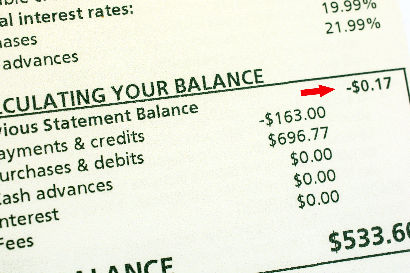
Frequently Asked Questions
Is the Statement Balance the Amount I Need to Pay?
Usually, the statement balance is the amount from your most recent completed billing cycle. If you want to avoid interest, paying the full statement balance by the due date may be the right goal when your card offers a qualifying grace period. Check your card agreement for exact rules.
Is the Current Balance More Important Than the Statement Balance?
Neither is always more important.
The statement balance helps you understand your monthly bill.
The current balance helps you understand what you owe now.
Therefore, both numbers have a purpose.
Should I Pay My Current Balance or Statement Balance?
For many people who can afford it, paying the full statement balance by the due date is a simple way to manage a card and potentially avoid interest on eligible purchases.
You can also pay the current balance if you want to clear all posted debt.
Can My Current Balance Be Higher Than My Statement Balance?
Yes.
New purchases after the statement closing date can increase your current balance.
For example, a $500 statement balance can become a $700 current balance after $200 in new purchases.
Can My Current Balance Be Lower Than My Statement Balance?
Yes.
A payment, refund, reward, or other credit can lower your current balance.
For example, a $1,000 statement balance could fall to $600 after a $400 payment.
Does Paying the Current Balance Avoid Interest?
It can, but the answer depends on your card terms and the types of transactions involved.
If your card has a grace period, paying the applicable statement balance in full by the due date can generally help you avoid interest on eligible purchases.
Does Paying the Statement Balance Build Credit?
Paying on time can help you maintain a positive payment history.
However, simply paying a statement balance does not automatically create a specific credit score.
Your credit score depends on several factors.
Therefore, focus on paying on time, controlling debt, and managing credit responsibly.
Does Current Balance Affect Credit Score?
Your current balance can matter indirectly, but the balance that appears on your credit report is the key figure for utilization calculations.
That reported balance may not match the current balance in your app.
Experian explains that credit card issuers may report balances around the end of billing cycles, though timing can vary.
What Is the Best Credit Utilization Ratio?
There is no single number that guarantees a good credit score.
Generally, lower utilization is better than very high utilization.
If you regularly use a large part of your available credit, consider paying down the balance and avoiding unnecessary new debt.
Should I Pay My Credit Card Before the Statement Closes?
You can.
Paying before the statement closes may reduce the balance that gets reported, depending on your issuer’s reporting schedule.
However, you do not need to do this every month simply because you have a credit card.
What Happens If I Pay More Than My Statement Balance?
Your current balance may become lower.
If you pay more than you owe, you could even create a credit balance.
The CFPB explains that a credit balance means the card company owes you money, and you may generally leave it on the account or request the funds back.
What Is a Credit Card Grace Period?
A grace period is the period between the end of a billing cycle and the payment due date.
When a card offers a grace period and you meet its requirements, you may avoid interest on eligible purchases by paying in full.
Do All Credit Cards Have Grace Periods?
No.
Credit card companies are not required to offer grace periods.
Therefore, check your card’s terms.
The CFPB confirms that most cards provide a grace period for purchases, but the rules can vary.
What Happens If I Only Pay the Minimum?
Your account can remain current if you pay the required minimum on time.
However, you may pay interest and take much longer to repay the debt.
The CFPB says paying more than the minimum can reduce interest costs and shorten repayment time.
Why Does My Credit Card Show Two Different Balances?
Your card shows two balances because they measure different points in time.
The statement balance comes from the last closed billing cycle.
The current balance reflects more recent account activity.
Why Did My Balance Increase After I Paid My Card?
Several things can cause this.
You may have made new purchases.
A pending purchase may have posted.
A fee or interest charge may have appeared.
Therefore, check your transaction history before assuming there is an error.
Why Is My Credit Report Balance Different From My App?
Credit card companies do not necessarily update credit bureaus at the exact moment your app changes.
Therefore, your credit report may show an older balance.
That difference can be temporary.
Does Paying the Current Balance to Zero Improve My Credit Score?
Not necessarily right away.
Your score depends on the information currently reported to the credit bureaus and other factors.
However, reducing revolving debt can lower utilization when the lower balance gets reported.
Can I Use My Credit Card After Paying the Statement Balance?
Yes.
You can normally continue using the card as long as the account remains open and you have available credit.
However, remember that new purchases can increase your current balance.
Is a Statement Balance the Same as a Minimum Payment?
No.
Your statement balance can be hundreds or thousands of dollars, while your minimum payment may be much smaller.
The minimum payment is the required minimum amount for that billing period.
The statement balance is the larger amount you owe from the closed billing cycle.
What Should Beginners Remember About Credit Card Balances?
Remember these four rules:
Statement balance = last bill.
Current balance = what your account shows now.
Minimum payment = smallest required payment.
Due date = payment deadline.
Also, spend only what you can realistically repay.
Final Verdict: Statement Balance vs Current Balance: What’s the Difference?
Statement Balance vs Current Balance: What’s the Difference? is much easier to understand when you focus on timing.
Your statement balance is the amount recorded when your last billing cycle ended.
Your current balance is the amount your account shows based on newer posted activity.
Therefore, the two numbers can be different.
A statement balance of $500 and a current balance of $700 does not mean your card made a mistake. It may simply mean you spent another $200 after the statement closed.
For many people, the simplest strategy is to check the statement balance, know the due date, and pay the full statement balance on time when they can afford to do so and when their card’s terms allow that payment to avoid interest on eligible purchases. The CFPB confirms that grace-period rules depend on the card and that paying in full can help avoid interest on qualifying purchases.
At the same time, keep watching your current balance.
It tells you how much you are using the card right now.
Finally, do not treat your credit limit as extra income. Use your card as a payment tool, keep your spending under control, and make payments on time.
Once you understand Statement Balance vs Current Balance: What’s the Difference?, reading your credit card account becomes much simpler.
External Resources
- Consumer Financial Protection Bureau — Credit Card Key Terms — Helpful explanations of grace periods, interest rates, credit balances, and other card terms.
- Consumer Financial Protection Bureau — Credit Card Payment Guidance — Explains minimum payments, due dates, late payments, and why paying more can reduce interest.
- Consumer Financial Protection Bureau — Grace Period Guide — Explains how credit card grace periods work.
- Experian — Statement Balance vs. Current Balance — Explains how the two balances differ and how they relate to credit.
- Experian — Credit Card Balances Explained — Covers statement balance, current balance, minimum payments, and credit utilization.