

What Is a Good Credit Utilization Ratio? In simple terms, a good target is below 30%, while a ratio in the single digits may be even better for your credit score.
However, 30% is not a magic cutoff. Your credit score can respond differently depending on your whole credit profile. FICO says credit utilization is an important part of the “amounts owed” category, which makes up about 30% of a typical FICO Score.
For example, if your credit cards have a combined limit of $10,000, using $1,000 means your utilization is 10%. Using $3,000 means it is 30%.
The key idea is simple: the lower your reported credit card balances are compared with your limits, the better.
What Is a Good Credit Utilization Ratio? Start Here
What Is a Good Credit Utilization Ratio? A practical answer is less than 30%, but many people aiming for excellent credit try to keep it below 10%.
There is no single percentage that guarantees a certain credit score. In fact, myFICO explains that the commonly discussed 30% figure is not a hard line where your score suddenly changes.
So, think of 30% as a warning line, not a target.
If you can comfortably keep your reported balance low without creating money problems, that is usually the better plan.
Why Credit Utilization Matters
Credit utilization tells lenders how much of your available revolving credit you currently use.
For example:
- Credit limit: $5,000
- Balance: $500
- Utilization: 10%
A person using $500 of a $5,000 limit may look less dependent on available credit than someone using $4,500.
The Consumer Financial Protection Bureau says credit scoring models consider how close you are to your credit limit.
Therefore, keeping balances low can help you manage your credit profile.
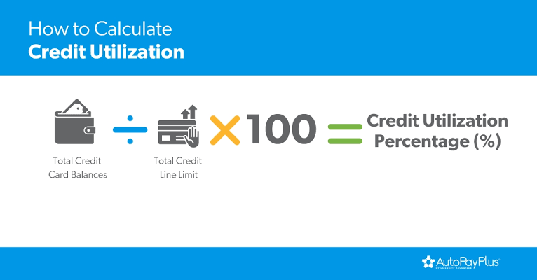
The Basic Credit Utilization Formula
The formula is very easy:
Credit utilization = credit card balance ÷ credit limit × 100
Suppose your card has a $2,000 limit and your reported balance is $400.
$400 ÷ $2,000 × 100 = 20%
That means your utilization is 20%.
For several cards, add the balances together and divide that total by the combined limits. Experian describes this same approach for calculating overall utilization.
A Simple 10%, 30%, and 50% Comparison
Here is a useful guide:
| Utilization | $10,000 Total Limit | General View |
| 0% | $0 | Very low |
| 5% | $500 | Very low |
| 10% | $1,000 | Excellent target for many people |
| 20% | $2,000 | Generally low |
| 30% | $3,000 | Common upper guideline |
| 50% | $5,000 | High |
| 75% | $7,500 | Very high |
| 100% | $10,000 | Maxed out |
These percentages do not guarantee a score result. Instead, they help you understand the relationship between your balance and available credit.
What Is a Good Credit Utilization Ratio for Excellent Credit?
What Is a Good Credit Utilization Ratio? If your goal is excellent credit, staying in the single digits can be a useful target.
Experian reports that people with exceptional FICO Scores often have utilization below 10%.
FICO also reports that people with very high scores can have especially low utilization. In one FICO analysis, consumers with 850 scores had an average overall utilization around 4.1%.
Still, do not chase a tiny percentage if doing so makes your budget harder.
The 30% Rule Is Not a Goal
Many articles say, “Keep utilization below 30%.”
That advice is useful, but it can create confusion.
You should not think:
“I can safely spend up to 30% every month.”
Instead, think:
“I should avoid letting my reported balances get close to my limits.”
Experian specifically warns that 30% should not be treated as a target. Lower utilization is generally better.
What Is a Good Credit Utilization Ratio Per Card?
What Is a Good Credit Utilization Ratio? It can be useful to look at both your overall ratio and the ratio on each individual card.
Imagine you have three cards:
- Card A: $900 balance / $10,000 limit = 9%
- Card B: $0 / $5,000 = 0%
- Card C: $1,500 / $2,000 = 75%
Your overall utilization may look reasonable, but Card C has a very high individual utilization rate.
FICO considers both overall utilization and high utilization on specific revolving accounts.
Overall Utilization vs. Individual Utilization
There are two numbers worth watching.
Overall utilization looks at your total balances compared with your total limits.
Individual utilization looks at one card at a time.
For example, your total limits might be $20,000, while your balances total $2,000. That equals 10%.
But if one card has a $1,900 balance on a $2,000 limit, that individual card sits at 95%.
That is why checking only the overall number can hide a problem.
Why a Maxed-Out Card Can Hurt
A maxed-out card tells a different story from a card with a small balance.
Suppose you have:
- $10,000 total credit
- $2,000 total balances
- Overall utilization: 20%
That sounds fairly low.
However, if the entire $2,000 sits on a card with a $2,000 limit, that card is at 100%.
High utilization on an individual account can affect scoring, even when overall utilization looks better.
When Does Your Credit Card Report Your Balance?
Your credit card balance and your credit report balance may not match.
Why?
Because card companies generally report account information to credit bureaus on a schedule. The reported balance may appear before your payment due date.
Experian notes that issuers often report around the end of the statement period.
Therefore, paying your bill in full by the due date does not always mean your credit report will show a zero balance.
Statement Balance vs. Current Balance
These two numbers can look similar but mean different things.
Current balance: What you owe right now.
Statement balance: What you owed when your billing cycle ended.
Credit reporting often follows information associated with the account’s reporting cycle rather than the balance you see at this exact moment.
So, if you want to reduce reported utilization, you may need to pay part of your balance before the statement closes.
What Is a Good Credit Utilization Ratio Before Applying for Credit?
What Is a Good Credit Utilization Ratio? Before applying for a mortgage, auto loan, or another major credit product, a lower reported ratio can be helpful.
If possible, review your balances several weeks before applying.
For example, instead of waiting until the payment due date, you could make an earlier payment to reduce the balance that gets reported.
However, do not drain your emergency savings just to make your utilization look better.
Your overall financial health matters more than chasing a perfect number.
A Real-Life Example: Maya’s $6,000 Limit
Maya has two credit cards.
- Card 1: $1,000 limit, $100 balance
- Card 2: $5,000 limit, $500 balance
Her total limit is $6,000.
Her total balance is $600.
$600 ÷ $6,000 × 100 = 10%
So Maya has a 10% overall utilization rate.
She uses her cards regularly, but she does not come close to her limits.
This example shows why adding all limits and balances can give you a clearer picture.
A Case Study: Daniel’s High-Use Card
Daniel has three cards with a total limit of $15,000.
His total balance is $2,250.
That gives him 15% overall utilization.
However, one card has a $2,000 limit and a $1,800 balance.
That card alone has 90% utilization.
Daniel may benefit from paying down that particular card first because its individual utilization is extremely high.
This is a good example of why overall utilization is not the whole story.
What Is a Good Credit Utilization Ratio With Multiple Cards?
What Is a Good Credit Utilization Ratio? With multiple cards, you should monitor the total and each card separately.
Consider this example:
| Card | Limit | Balance | Utilization |
| A | $4,000 | $200 | 5% |
| B | $3,000 | $300 | 10% |
| C | $3,000 | $500 | 16.7% |
| Total | $10,000 | $1,000 | 10% |
The overall ratio is 10%.
Each individual card also stays below 30%.
That is a much cleaner profile than having one card close to its limit.
Why Paying in Full Is Still a Smart Move
Some people believe you should carry a balance to build credit.
That is a common mistake.
You do not need to pay interest to build a credit history.
Experian says carrying a revolving balance does not help your credit score and can lead to interest charges.
Instead, use your card responsibly and pay the bill on time.
If you can afford it, paying the statement balance in full can help you avoid interest.
Does 0% Utilization Help?
A 0% utilization rate is not necessarily better than a small reported balance.
FICO notes that very low utilization can be better for scoring than 0%, because a small balance can show that you are using credit responsibly.
However, this does not mean you should carry debt and pay interest.
You can use a card for a small purchase and then pay it off.
What Is a Good Credit Utilization Ratio at 0%?
What Is a Good Credit Utilization Ratio? Zero utilization is not automatically bad, but it may not give scoring models as much information as a small reported balance.
For example, you might use a card for a $25 purchase.
If that small balance gets reported and you then pay the bill in full, you can use credit without carrying costly debt from month to month.
Your exact score response will depend on the scoring model and your complete credit file.
How Payment History Fits Into the Picture
Utilization matters, but payment history matters even more in the FICO scoring model.
Experian says payment history makes up 35% of a typical FICO Score, while amounts owed makes up 30%.
So do not sacrifice an on-time payment just to lower utilization.
A good order is:
- Pay bills on time.
- Avoid taking on debt you cannot repay.
- Keep card utilization low.
- Build a long credit history.
- Apply for new credit carefully.
What Is a Good Credit Utilization Ratio for a Beginner?
What Is a Good Credit Utilization Ratio? For a beginner, staying below 30% is a simple starting rule.
But you can make the goal easier by aiming for 10% or less when possible.
For example, if your card has a $1,000 limit, try to keep the reported balance around $100 or less if that fits your spending needs.
Most importantly, do not spend more just to “use your credit.”
A credit card should support your budget, not replace it.
How to Lower Your Utilization Quickly
If your ratio is high, you have several options.
Method 1: Make an Early Payment
Pay part of the balance before the statement closes.
Method 2: Pay Twice Each Month
Instead of making one large payment, split it into two payments.
Method 3: Stop New Card Spending Temporarily
If your balance is growing faster than you can repay it, pause unnecessary purchases.
Method 4: Pay the Highest-Utilization Card First
This can quickly reduce a card that is close to its limit.
Ask for a Higher Credit Limit Carefully
A credit limit increase can reduce utilization if your balance stays the same.
For example:
- Old limit: $5,000
- Balance: $1,500
- Utilization: 30%
If your limit rises to $10,000:
- Balance: $1,500
- New utilization: 15%
However, do not request a higher limit if it could encourage you to spend more.
Also, ask your issuer whether the request could involve a hard credit inquiry.
What Is a Good Credit Utilization Ratio After a Limit Increase?
What Is a Good Credit Utilization Ratio? After a limit increase, the same basic targets still apply.
A higher limit does not mean you should increase your spending.
Instead, think of the extra available credit as a safety cushion.
For example, if your limit doubles from $5,000 to $10,000, keeping your balance at $500 would reduce utilization from 10% to 5%.
That is useful only if you continue to control spending.
Should You Close an Unused Credit Card?
Closing an unused card can sometimes hurt your utilization ratio.
Imagine:
- Card A: $2,000 balance / $4,000 limit
- Card B: $0 balance / $6,000 limit
Together, your utilization is 20%.
If you close Card B, your total limit falls to $4,000.
Now your $2,000 balance equals 50%.
The CFPB warns that closing a card can increase your utilization and potentially lower your score.
Advantages of Low Credit Utilization
Keeping utilization low has several possible advantages.
- It can support a stronger credit score.
- It gives you more available credit.
- It reduces the chance of maxing out a card.
- It can make debt easier to manage.
- It can help you look less dependent on revolving credit.
- It gives you more room for unexpected expenses.
However, low utilization does not replace good payment habits.
Disadvantages of Chasing a Perfect Ratio
Trying to maintain an extremely low ratio can create problems.
For example, you might:
- Make unnecessary payments while ignoring other bills.
- Use savings that you need for emergencies.
- Open new cards only to increase available credit.
- Spend money simply to show card activity.
- Become obsessed with daily score changes.
Credit management should make your financial life easier, not more stressful.
What Is a Good Credit Utilization Ratio When Money Is Tight?
What Is a Good Credit Utilization Ratio? When money is tight, focus first on avoiding missed payments and controlling new debt.
Do not empty your emergency fund just to move from 15% utilization to 5%.
Instead, create a realistic payment plan.
If you are struggling with credit card debt, contact your card issuer early and ask about available hardship or payment options.
The goal is not to create a perfect credit report overnight.
The goal is to build healthier money habits over time.
A Practical Utilization Chart for $1,000 Limits
Here is a quick reference:
| Card Limit | 10% | 20% | 30% | 50% |
| $500 | $50 | $100 | $150 | $250 |
| $1,000 | $100 | $200 | $300 | $500 |
| $2,000 | $200 | $400 | $600 | $1,000 |
| $5,000 | $500 | $1,000 | $1,500 | $2,500 |
| $10,000 | $1,000 | $2,000 | $3,000 | $5,000 |
This chart makes the concept easy to understand.
What Is a Good Credit Utilization Ratio for a $5,000 Card?
What Is a Good Credit Utilization Ratio? On a $5,000 card, staying below $1,500 keeps utilization below 30%.
A $500 reported balance equals 10%.
A $250 balance equals 5%.
A $2,500 balance equals 50%.
Therefore, someone aiming for a strong credit profile may prefer to keep the reported balance much lower than $1,500.
The Hidden Problem With Minimum Payments
Minimum payments can keep an account current, but they may not reduce the balance quickly.
For example, if you repeatedly spend $800 and make only small payments, your utilization can remain high.
High utilization can also create expensive interest costs when you carry balances.
Therefore, if possible, pay more than the minimum and avoid adding new debt while you repay old debt.
How Interest and Utilization Work Together
Credit utilization and interest are different issues.
Your utilization can affect credit scoring.
Interest affects how much your debt costs.
For example, you could have a 5% utilization rate but still pay interest if you carry a balance.
Therefore, a low utilization rate does not automatically mean a debt strategy is cheap.
Paying on time and paying in full when possible can address both concerns.
What Is a Good Credit Utilization Ratio Across All Cards?
What Is a Good Credit Utilization Ratio? For overall utilization, below 30% is a useful ceiling, while below 10% is often a stronger target.
Suppose you have four cards:
- Total limits: $20,000
- Total reported balances: $1,600
Your utilization equals 8%.
That is a low overall ratio.
Still, check each card individually because one card could have a much higher percentage.
Expert Advice: Focus on Low Debt, Not Score Tricks
The best approach is simple.
FICO: Lower utilization is generally better, and very low utilization can be helpful for high scores.
Experian: Under 30% is a useful general guideline, while single-digit utilization may be better for people seeking very strong scores.
CFPB: Keeping balances low compared with your credit limits can help, and experts commonly advise staying at or below 30%.
The common message is clear: lower is generally better, but 30% is not a magic number.
A Better Monthly Credit Card Routine
Try this simple routine every month:
Step 1: Check your current balances.
Step 2: Check your credit limits.
Step 3: Calculate your utilization.
Step 4: Look at each card separately.
Step 5: Pay on time.
Step 6: Pay more than the minimum when possible.
Step 7: Pay before the statement closes if you want a lower reported balance.
Step 8: Check your credit reports regularly.
This routine takes only a few minutes.
What Is a Good Credit Utilization Ratio on Your Credit Report?
What Is a Good Credit Utilization Ratio? The important number is generally tied to the balances and limits reported to the credit bureaus.
That means your banking app may show one number while your credit report shows another.
Experian explains that utilization calculations use information appearing on your credit report rather than necessarily the current balance displayed in your account.
So, check your credit reports when you need an accurate picture.
Why Your Credit Score Can Change Without New Debt
You may see your credit score change even though you did not open a new account.
One reason could be a change in your reported card balances.
For example, you might normally report $300 on a $5,000 limit.
Then one month, you make a large $2,000 purchase before the statement closes.
The higher reported balance can increase your utilization.
After you pay it down, your ratio may fall again.
What Is a Good Credit Utilization Ratio for Home Buyers?
What Is a Good Credit Utilization Ratio? If you plan to apply for a mortgage, keeping revolving balances low can be helpful.
However, mortgage lenders look at much more than utilization.
They may review income, debt obligations, payment history, credit history, and other information.
Therefore, do not make a major financial move based only on a credit utilization percentage.
Instead, prepare several months ahead and review your overall finances.
Common Mistakes to Avoid
Here are mistakes that can make credit management harder:
Mistake 1: Treating 30% as a spending goal.
Mistake 2: Carrying debt because you think it builds credit.
Mistake 3: Ignoring individual card utilization.
Mistake 4: Closing cards without understanding the effect.
Mistake 5: Making only minimum payments forever.
Mistake 6: Applying for several cards simply to increase limits.
Mistake 7: Checking only your current balance.
Avoiding these mistakes can make your credit plan much simpler.
What Is a Good Credit Utilization Ratio for a Family Budget?
What Is a Good Credit Utilization Ratio? For a family budget, the best ratio is one that stays comfortably low without causing other financial problems.
Suppose your family has $10,000 in available credit.
You might aim to keep reported balances below $1,000.
But if paying that balance down would leave you unable to pay rent, utilities, food, or emergency expenses, adjust your plan.
Your credit score should never become more important than essential household needs.
A 30-Day Credit Utilization Improvement Plan
Here is a simple plan you can try.
Week 1
List every credit card, its limit, and its current balance.
Week 2
Calculate individual and overall utilization.
Week 3
Pay down the card with the highest utilization if your budget allows.
Week 4
Review your statement closing dates and create reminders.
Then repeat the process next month.
Small actions can become strong habits.
What Is a Good Credit Utilization Ratio? Final Target Guide
What Is a Good Credit Utilization Ratio? Use this simple target guide:
| Target | Meaning |
| 0% | No reported revolving balance |
| 1–9% | Excellent low-utilization target |
| 10–29% | Generally low and manageable |
| 30% | Common upper guideline |
| 31–49% | Higher utilization |
| 50–74% | High utilization |
| 75–99% | Very high utilization |
| 100% | Maxed out |
Remember, these ranges are educational guidelines rather than guaranteed score outcomes.
Frequently Asked Questions
What Is a Good Credit Utilization Ratio?
What Is a Good Credit Utilization Ratio? A good general target is below 30%, while single-digit utilization can be even better for people seeking excellent credit.
Is 30% Credit Utilization Good?
Yes. A ratio below 30% is commonly recommended as a general guideline. However, lower utilization may be better, and 30% is not a magic cutoff.
Is 10% Credit Utilization Better?
Generally, yes. A 10% ratio is low, and people with very high FICO Scores often have utilization in the single digits.
Is 0% Utilization Bad?
No. Zero utilization does not automatically damage your credit. However, a small reported balance may provide scoring models with more information about your credit use.
Should I Carry a Balance to Build Credit?
No. You do not need to carry a balance or pay interest to build credit. Paying your card in full can help you avoid unnecessary interest costs.
Does Paying My Card in Full Lower Utilization?
Yes, paying down a balance reduces your utilization. However, the balance reported to credit bureaus may be different from your current balance, depending on when your issuer reports.
Does Credit Utilization Include All Credit Cards?
Overall utilization can include the balances and limits across your revolving accounts. Credit scoring models can also consider utilization on individual accounts.
Can One Maxed-Out Card Hurt My Credit?
Yes. A very high utilization rate on one card can affect your score even when your overall utilization is relatively low.
Does Closing a Credit Card Hurt Utilization?
It can. Closing a card removes its available credit limit, which may increase your overall utilization if you still have balances on other cards.
How Quickly Can Utilization Change?
It can change when new balance information reaches the credit bureaus. Therefore, your score may change after a lower or higher balance gets reported.
Should I Pay Before My Statement Date?
If your goal is to reduce the balance that gets reported, an early payment may help. Card issuers often report around the statement period.
Does a Higher Credit Limit Lower Utilization?
It can, provided your balance stays the same. For example, increasing a $5,000 limit to $10,000 while keeping a $1,000 balance reduces utilization from 20% to 10%.
Is 50% Utilization Too High?
It is considered high compared with the common below-30% guideline. If possible, paying down the balance can reduce your utilization.
Does Utilization Affect FICO Scores?
Yes. FICO includes revolving utilization within its “amounts owed” category, which accounts for about 30% of a typical FICO Score.
Does Utilization Affect Every Credit Score the Same Way?
No. Different scoring models can use different formulas. Also, lenders may use different versions of FICO or other scoring systems.
Should I Open Another Card to Lower Utilization?
Not automatically. A new card could increase available credit, but applying for new credit can have other effects. Do not open an account simply to chase a lower utilization percentage.
Can Credit Utilization Improve After Paying Debt?
Yes. Lower reported revolving balances can reduce your utilization. Experian notes that utilization is one of the factors that can change relatively quickly as reported balances change.
What Is a Good Credit Utilization Ratio Before a Loan?
What Is a Good Credit Utilization Ratio? A low ratio, ideally below 30% and potentially in the single digits, can be a sensible target before applying for major credit. However, lenders consider many other factors too.
Should I Check Utilization Every Day?
No. Daily checking is usually unnecessary. A monthly review, or a review around statement dates when preparing for a major application, is often more practical.
What Is the Biggest Credit Utilization Mistake?
Treating 30% as permission to spend 30% of your credit limit is one of the biggest mistakes. The better approach is to keep balances low and borrow only what you can comfortably repay.
Final Takeaway: Keep the Number Low and the Plan Simple
So, What Is a Good Credit Utilization Ratio? The easiest answer is below 30%, with single-digit utilization often being an even stronger target.
Still, do not let the 30% rule confuse you.
There is no magic percentage that guarantees a high credit score. FICO and Experian both point toward the same broad idea: lower utilization is generally better, while individual card utilization can matter alongside your overall ratio.
Most importantly, focus on habits that work in real life:
- Pay every bill on time.
- Keep credit card balances low.
- Pay your statement balance in full when you can.
- Avoid maxing out cards.
- Watch individual and overall utilization.
- Be careful about closing unused cards.
- Do not open accounts only to increase your available credit.
- Check your credit reports regularly.
- Build good habits over time.
A strong credit profile does not require complicated tricks. Use less credit than you have available, pay what you owe on time, and keep your borrowing under control.
External resources
For authoritative information, readers can also consult the Consumer Financial Protection Bureau credit-score guide, myFICO’s credit utilization guidance, and Experian’s credit utilization guide.
Editorial note: Credit scoring models and lender requirements can change, so readers should check current terms and official sources before making a major financial decision. This article provides general educational information, not personal financial advice.